Pages

Monday, May 26, 2014

Did You Know You Could Talk To Google?


In a recent update, Google now allows all those with the Chrome browser, Mac & Windows alike, to search Google via their voice. "Ok Google" is Google's popular buzzword or as they like to call it "hotwording" that allows you to access Google's talk feature without having to actually click something to turn it on. Just update your Chrome browser, restart it, and you're talking to Google. 


So how does Google's voice compare to the other listening software out there? From this blogger's perspective, it actually works the best. For me, I have to speak to Siri in a British accent in order for her to understand me, which 90% of the time she does not. As for Windows' Cortana, which comes from their popular Xbox exclusive game Halo, we will have to wait and see. 


However, in my past experience with Windows' voice commands, I don't expect it to be too good. Alought, it has been years since I read paragraph after paragraph of Shakespeare to my old Dell laptop in order for the program to learn my voice, so I hope some updates have been made to the program. 

Regardless, this technology is soon to take off. We've removed the buttons from our phones and now the phones are no longer in our hands. This is a dream for millions of geeks around the world as we continue to bring the the future closer. 

Wednesday, May 21, 2014

Companies Who Love To Snapchat

limesub media, sean locklin, snapchat, companies, social media,

Snapchat is a fun, yet controversial, piece of social technology and most view it as a recreational app. However, some brands have harnessed the power of Snapchat to strengthen their relationship between them and their consumers.

Snapchat has over 26 million users and there are more than 400 million snaps per day, which is large audience that just continues to grow. The major networking and digital sites have taken notice with Facebook offering Snapchat $3 billion in cash last year and Yahoo recently acquiring Snapchat's rival Blink.

Therefore, if the big digital companies like Facebook and Yahoo are willing to pay large amounts of money for this type of technology, then there has to be something Snapchat can do for businesses. As a matter a fact there is and these companies took a chance on Snapchat's quick image flash technology to better connect with their consumers.

Some brands send product information to their followers on Snapchat. American Eagle and Whole Hearted Clothing send snaps to their followers and give them "behind the scenes" previews of upcoming clothing they're about to release.


Other brands still use Snapchat in a fun way, which shows that they are not just some large robotic company, but a cool company who can relate to their followers. Two companies that do this well are Mashable and Refinery29, who even take the time to write goofy messages on their snaps. 


Snapchat continues to grow and cause controversy in the realm of privacy, but for now it seems that their snaps are powerful and a fun way to connect with followers. As Snapchat continues to receive a lot press, we'll see more and more companies adopting the initial trends of the aforementioned companies, which would be a great recommendation for a company trying to stand out. 


Sunday, November 24, 2013

Now Supercomputers Have Found Their Way To The Cloud


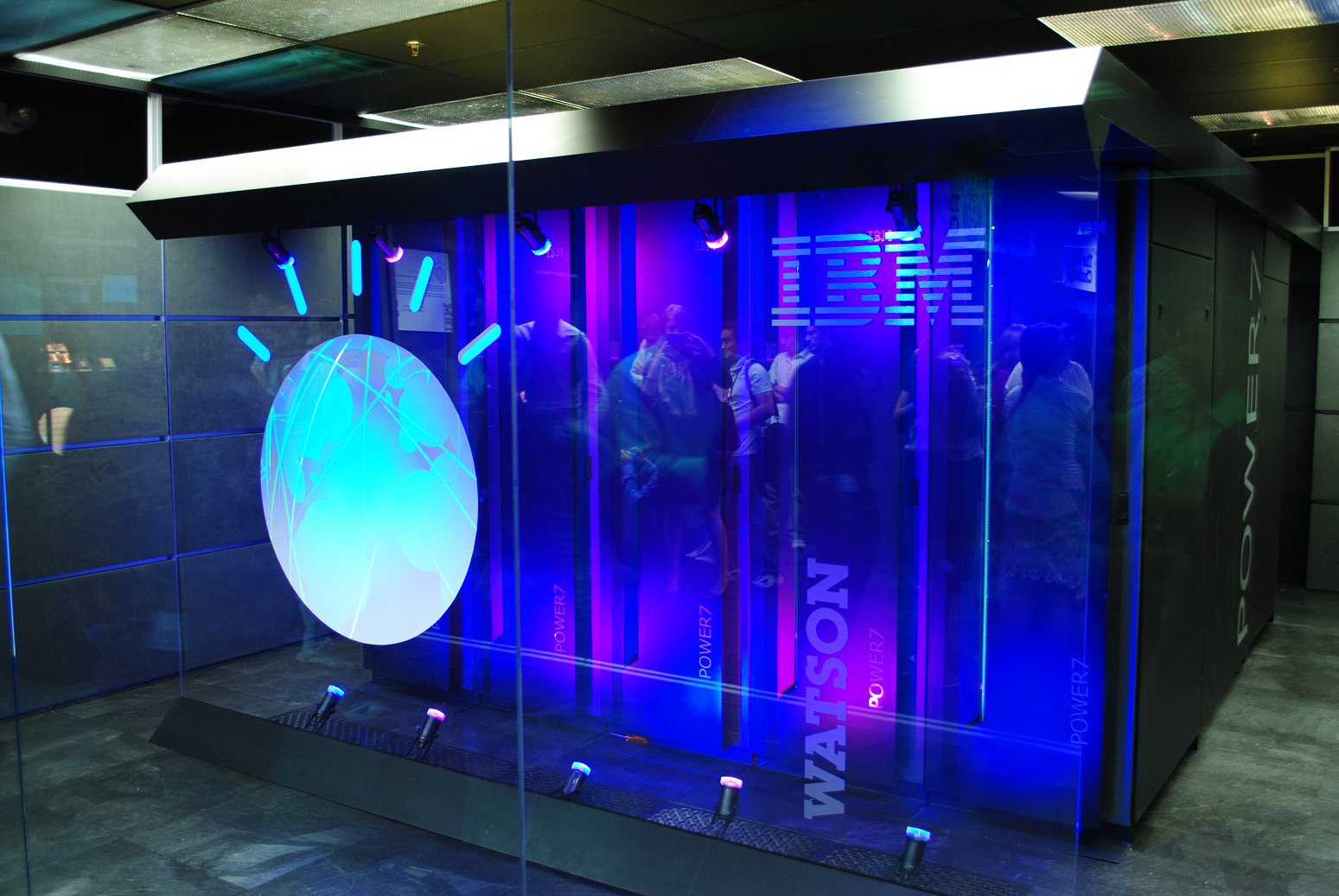
Remember awhile back when IBM came out with a supercomputer, named Watson, which competed against past winners on Jeopardy and won? Well, IBM has been doing a lot with Watson since then by applying him to certain industries to boost productivity. According to Geeks Are Sexy, “It’s already been used for projects such as improving automated customer help systems, figuring out the best options for hospitals trying to buy medicines and equipment, and helping tailor lifestyle and health advice to individuals.”

Other uses have been suggested and could possibly be integrated with Watson, such as deciphering ones medical condition from a list of given symptoms. Also, taking over that painstaking task of troubleshooting technical problems with computers.

However, the big news now is that IBM has migrated Mr.Watson to “the cloud” where he is free to run his complex functions at high speeds. What’s particularly interesting is that Watson will become a type of PaaS (remember the differences from our last post?). This means that he will be available to the public as a cloud-based development platform, but that isn’t IBM’s main goal. IBM has put Watson in “the cloud” to encourage new ideas of how society can use a supercomputer like Watson. They’re hoping for the next great idea to come along so that Watson can facilitate it with his blinding fast human-like reasoning. IBM has made it readily available and using Watson for development isn’t hard because according to IBM, “using Watson will be relatively simple and developers won’t need to have a working knowledge of how machine learning works. They will, however, need to provide suitable “training data” to be able to go and use Watson for real.”

So far, the next great idea hasn’t found its way to Watson’s development cloud, but it’s only a matter of time before some genius finds a way to leverage the power of an artificial brain for the greater good. This author’s suggestion would be to have Watson give Siri some pointers; she’s nowhere near ready for Jeopardy.


Sunday, November 10, 2013

3 Common Types Of ‘ The Cloud’ That People Seem To Confuse

We already know that “The Cloud” is an innovative technology that has brought savings and time efficiencies to small business, large corporations, and even governments. However, now that people understand what “The Cloud” is, the industry lingo is starting to become more prevalent and it tends to confusing people. Therefore, this post will examine the different types of “clouds” that people can easily understand, but tend to get lost when they are referred to in an industry tongue.


SaaS
Let’s start with the one that most people will use for their business, SaaS, which stands for software-as-a-service. With SaaS a cloud provider, like Amazon, hosts your company’s applications on their servers. The employee then access the companies migrated data through a web browser. This is a monthly fee, like Internet service, that the company has to pay. Usually the fee is based on the number of users who have access to the SaaS cloud.

IaaS
The second most common “cloud” is IaaS which stands for Infrastructure-as-a-service and in this scenario the cloud provider offers all equipment to run the company’s applications such as servers, storage, switches, etc. to the company sort of like renting it. However, this “rented” equipment is found virtually on the provider’s cloud and is on a pay-as-you-go model. This scenario is good for bigger companies who have an integrated network.

PaaS
Finally, the third most common cloud, PaaS, stands for platform-as-a-service. This is used mainly for developers who create software using and directories from the cloud provider. This is used for IT companies and large corporations who have in house IT employees that need to create software for the company or edit code.


Each service has its own specific use, which is geared towards different size companies and industries.  Each of them provides a faster, more readily available, way of doing every day computing for your business. Whether it be developing a new application or accessing your information remotely, these common cloud services will provide an increase in cost saving and employee efficiency.
WebRep
currentVote
noRating
noWeight

Sunday, October 27, 2013

Entrepreneurs and Business Plans (pt. 2)


After doing my research on the Economic experts of Chuck Blakeman, Carl Schramm, and Kyle Murphy, in regards to business plans, I’ve taken into account their views. I have then adopted a couple of their ideas to incorporate into my business plan in order to have a sound business plan for success. Some of their ideas seem odd, but there is some truth to them, however, without a sound foundation of knowledge, these ideas would be a waste.

One of the main things that I found interesting about business plans from Chuck Blakeman and Carl Schramm is that they do not really care for them. Odd, but they do not like business plans and they would be the first to tell you that. Don’t get me wrong they do not avoid them altogether and they feel that business plans are a great starting point to beginning a business, but it shouldn’t become the entrepreneur’s “bible.” Meaning that an entrepreneur should use the business plan as more of a guide than sticking to the plan no matter what. I find this useful, because there have been times, while formulating my business plan, where I felt something major needed to be changed, which would end up altering the end product. If I stick by my original business plan and ignore the major change, I will end up with something I feel is incomplete. In my opinion, the business plan should be treated like an outline.

The other main idea that I incorporated into my business plan was Kyle Murphy’s idea of having a savvy team. First off, this doesn’t mean I need to hire good people, it means that the people I hire should have the capabilities to execute the business plan successfully. He points out that when investors are looking at a company to invest in, they aren’t just looking for the best return, they looking to see if the company can successfully do what they say they can do. Moreover, they are looking to see if a company can be experts in the field they are trying to go into. Once they know executing wont be a problem, they’ll be more likely to invest. Therefore, in my plan I will “show off” my knowledge of cloud-computing and make sure I hire people who are as good, if not, better than myself. 

Sunday, October 6, 2013

Entrepreneurs and Business Plans (pt. 1)

Carl Schramm graduated from LeMoyne College, did his undergraduate at the University of Wisconsin and acquired a law degree from Georgetown. Carl is University Professor at Syracuse University and has worked as a CEO for various large companies. He worked for The John Hopkins University, wrote several books where he collaborated with other leading economists, and won numerous awards. Furthermore, he has written a number of articles for The Atlantic, Forbes, and the Huffington Post, just to name a few. 

Chuck Blakerman is a unique individual when it comes to the world of business. According to Chuck’s site, “he has created five different businesses and two non-profits from the ground up, making every mistake possible along the way to some big wins.” He is a major business speaker on an international platform and is responsible for over 100 speeches and workshops each year. He has written articles and been featured in Entrepreneur Magazine, CNNMoney, NYTimes, and several other publications in Australia and New Zealand. Currently, Chuck runs his own company called the Crankset Group, which helps other business owners get the passion they once had for their business so it can get back on course and become more successful. 

What is interesting about these two celebrated economists is that when it comes to a business plan, they are not too concerned with them. Both Schramm and Blakerman are not keen on business plans, they agree they have a place, but one should not base everything on the business plan in their minds. According to Loreal Hartwell, “Basically, it is [Blakeman’s] belief that a new company does not need a business plan to get started.” However, a business plan still needs to be a good business plan regardless of how much you stick to your plan. 

Therefore, what are investors looking for in a good business plan? They’re obviously looking for a return on their money, but the most important thing is not the idea or the company, it’s you. Investors are basically trying to see if you and your team are savvy enough to see your idea through from start to finish with few hiccups. The last thing they want to do is take a risk on an idea or business that has a bunch of flaws and an unclear way of fixing them. According to Kyle Murphy, Entrepreneurship Lecturer at Pepperdine University, “they’re betting on the jockey and not the horse.” Therefore, a good business plan must start with you. Make sure you have a clear idea, a great team, and a passion to see it to fruition.

Sunday, September 22, 2013

Movies Online


There’s no doubt that ‘The Cloud’ is an efficient tool that can help businesses and governments save money.  But is that it? Is the cloud only useful for obtaining business files remotely and increasing employee collaboration? No, the cloud is a mysterious new technology that continues to morph its way into new industries and promote its core values: costs saving and efficiencies. Where has the cloud found its way to now? Well, this time ‘the cloud’ has made its way to the silver screen and put movies online. Movies are the ultimate entertainment, they allow us to escape from this crazy world for a couple hours to laugh and cry. Now it seems that studios produce movies quicker and more efficiently with the help of the cloud.

Let’s take a look at the Oscar-winning Tony Clark. Clark founded the company Rising Star Picture that had their hand in making The Great Gatsby, Wolverine, and Hunger Games. Clark is a strong proponent of ‘The Cloud’ and says that it has saved his 40 employee, $12-million-a-year company money. However, Clark has taken the integration of the cloud a step further.  In 2004, Clark received a grant of $500,00 dollars from the South Australian government to set up cine.net, which is a private network for Australian filmmakers that allow speeds up to 40 gigabits a second. This later gave birth to cineSync that, “allows directors and editors to work on a film by videoconference, sharing their ideas as images roll on their screens,” says The Sydney Morning Herald. Due to the mass use of cineSync in major productions, Clark and his team won the ‘SciTech Oscar’ in 2011.

CineSync isn’t the only cloud company out there creating cloud technology and winning awards in the film industry. Vision Cloud, a European Union startup that recently won the IBC2013 Special Award for their work with the cloud and media, is out there making waves. According to IBC’s CEO, Michael Crimp, "the landscape of our industry has been transformed, and continues to develop, from traditional broadcasting to content everywhere.” Soon, all movies will be edited, and possibly filmed, in the cloud with ability to stream them to your home instantly.